
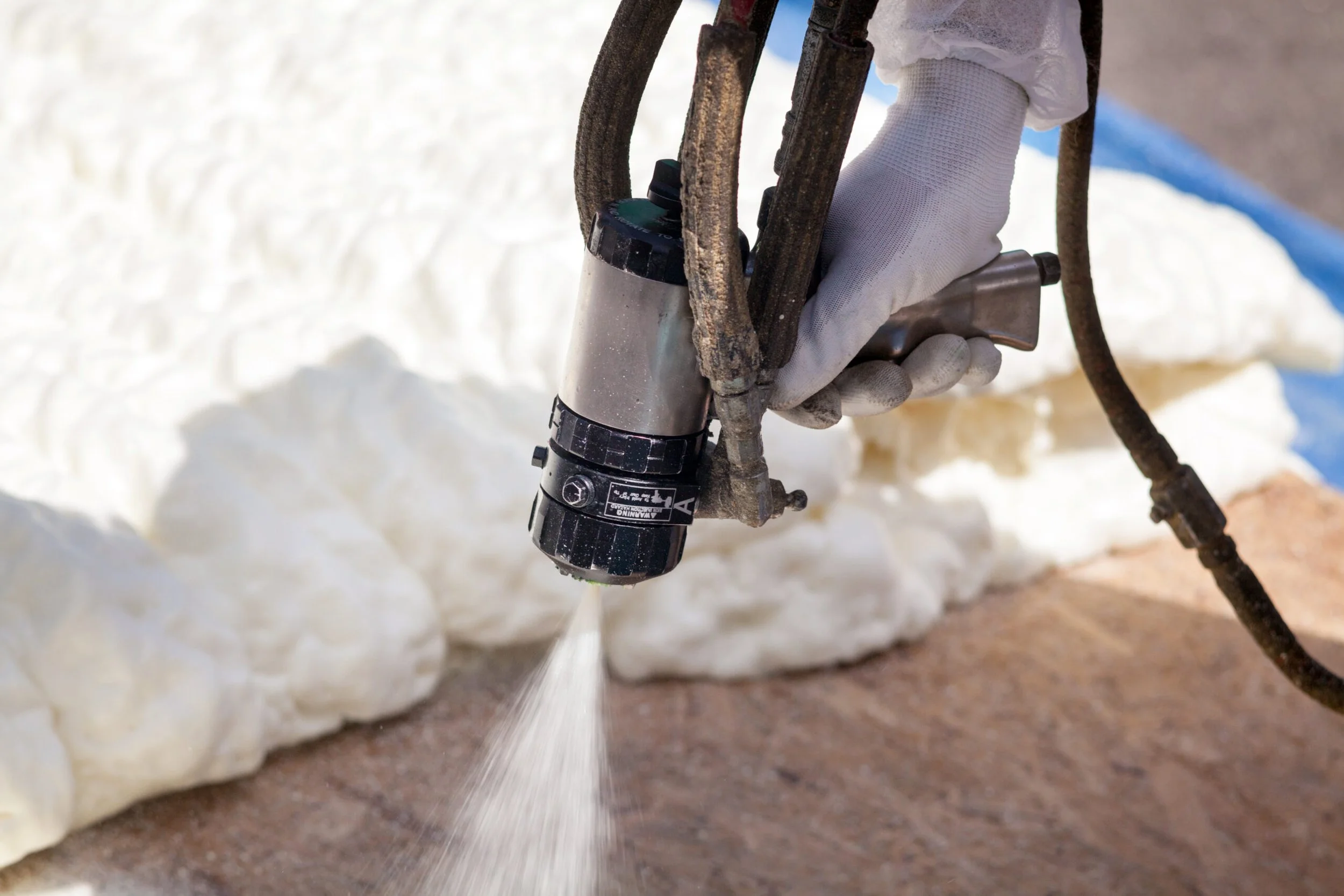
Spray Foam Insulation for Air Sealing and Thermal Performance
Upgrade your insulation with spray foam and experience more home comfort, better indoor air quality, and more.
Spray foam has an advantage over most insulation because it can air seal as well as insulate, making it extremely efficient.
Like other home insulation materials, spray foam can help improve indoor comfort and lower heating and cooling costs. Home Efficiency Experts is a local spray foam insulation contractor serving Nassau and Suffolk Counties on Long Island. We specialize in home upgrades that are based on building science that can save you money and make your home more comfortable.
What is Spray Foam Insulation?
Spray foam insulation is made up of two chemicals that, when combined, create a liquid foam that expands and hardens as it dries. Within the foam are small air bubbles, known as cells, that contribute to its resistance to both heat and air flow. There are two types of spray foam insulation: open-cell and closed-cell:
Open-cell spray foam – The cells in open-cell foam are exactly that, open. This means that the final product is flexible with more space in between the unenclosed cells. Open-cell spray foam is a great option for interior walls, but it can be vulnerable to moisture intrusion.
Closed-cell spray foam – The cells in closed-cell spray foam are tightly packed and fully enclosed. This gives the final product a more rigid structure, making it a great option for attics and crawl spaces.
The Benefits of Spray Foam Insulation
Superior R-value to other insulation types
Insulates and air seals
Acts as a moisture barrier
Reduces noise
Long-lasting
Improves indoor air quality
Where to Install Spray Foam Insulation
Installing spray foam insulation is a tricky process that requires strict attention to detail and it should always be installed by a professional. Using incorrect chemical ratios or improperly applying the foam can make it less effective or even cause damage to your home. Here are a few of the common places we use spray foam at Home Efficiency Experts:
Attics
Spray foam insulation can be added to an attic in one of two ways:
As home air sealing to fill in any gaps or voids in the attic floor associated with wire or plumbing penetrations, light fixtures, interior and exterior wall top plates, and open chases.
As insulation along the attic roof slope. Commonly known as a spray foam “hot roof,” this sometimes is the best option for homes where insulating the attic floor is simply not a viable option. One such example might be a “Cape Cod” style home with small knee wall attics that are used entirely for storage.
Rim Joists
Another area of concern in any home with an unfinished basement or crawlspace area is the rim joist, where the foundation meets the wood framing members above. This area is often not insulated, or poorly insulated, and full of holes going directly outside! Not only does this lead to tremendous heat loss but is also a major source of unconditioned air and moisture entering the home.
The process by which conditioned air (that you pay for) escapes through the top of the house (the attic) and is replaced by unconditioned air through the bottom of the house is known as the stack effect. One effective way to slow this process down is adding spray foam to the rim joist in the basement or crawl space. Not only does this add R-value (approximately R-15), but it also adds an air and moisture barrier as well! This will help greatly with making your basement or crawl space drier while also keeping the floors above much more comfortable!
Frozen Pipe Prevention
Spray foam can also help prevent pipes in unconditioned areas of the house from freezing, which is an issue for many homeowners living in Long Island. By adding spray foam insulation to the exterior of an unconditioned area (i.e. crawl space or attic knee walls), any pipes or ducts within that space are given extra protection against the cold. This could end up saving homeowners thousands of dollars over the years on future repairs as well as heating and cooling costs! And perhaps the best part — spray foam insulation will never deteriorate.
Spray Foam Insulation vs Traditional Insulation for Maximum Energy Efficiency
We help homeowners compare spray foam insulation with traditional insulation materials based on performance and efficiency. Spray foam insulation offers higher R-values than fiberglass and cellulose, providing better thermal resistance and improved energy savings. Unlike traditional insulation, spray foam also creates an effective air seal, reducing drafts and minimizing energy loss.
This dual performance helps improve indoor comfort while lowering utility costs. We recommend spray foam for homeowners seeking long-term efficiency and enhanced home performance. Our mission is to provide insulation solutions that enhance comfort, minimize energy waste, and boost the overall efficiency of your home throughout the year.
Two-in-One Spray Foam Insulation and Air Sealing Solution
We provide spray foam insulation as a two-in-one solution that both seals air leaks and insulates your home. Unlike traditional insulation, spray foam has the unique ability to expand and fill in those pesky gaps and cracks. This not only creates a solid air barrier but also provides fantastic thermal protection.
This helps prevent drafts, reduce heat transfer, and maintain stable indoor temperatures throughout the year. By combining insulation and air sealing in one application, we improve energy efficiency and indoor comfort simultaneously. Our approach helps homeowners reduce energy costs while creating a healthier and more comfortable living environment with long-lasting performance benefits.
Spray Foam Insulation Applications
We apply spray foam insulation in key areas throughout the home to maximize efficiency and comfort. Attics are insulated to reduce heat loss and improve temperature control during every season. Crawl spaces benefit from spray foam by minimizing moisture issues and improving indoor air quality.
We also insulate walls and rim joists to prevent drafts and reduce energy loss. Spray foam expands into small gaps, creating a durable seal in difficult-to-reach spaces. Our goal is to provide complete home protection by improving insulation performance in the areas most responsible for energy waste and air infiltration.
Ready to Improve Your Home's Efficiency?
Contact Home Efficiency Experts for a thorough home assessment or to book your service.
Our Spray Foam Insulation Installation Process and Timeline
Initial Home Inspection
We inspect homes identifying areas needing spray foam insulation installation improvements.

Professional Foam Application
We apply spray foam carefully ensuring complete coverage and sealing performance.

Final Review and Cleanup
We complete final inspections ensuring quality installation and clean project completion.

Take the guesswork out of home improvements-find solutions that will save money and improve indoor comfort. A free home energy assessment can tell you why your utility bills are on the rise. Plus you will receive a free room temperature and humidity gauge with your assessment.
Frequently Asked Questions
-
We choose spray foam insulation for homes that need a strong air seal and high energy performance. It expands to fill gaps and hard-to-reach areas, making it ideal for improving overall efficiency and comfort.
-
We apply spray foam as a liquid that quickly expands and hardens, sealing cracks, joints, and openings. This process helps block unwanted airflow and creates a continuous barrier throughout the treated area.
-
Yes, we use spray foam insulation to help reduce moisture intrusion by sealing areas where humid air can enter. This added protection can help prevent mold growth and improve indoor air conditions.
-
We see the greatest benefits when applying spray foam in attics, crawl spaces, rim joists, and wall cavities. These areas are often the biggest sources of air leaks and energy loss.
-
We follow a precise installation process that includes preparing surfaces, applying the correct thickness, and ensuring even coverage. This helps maximize performance and ensures long-lasting results.